Preferred Side and Flat Head

Tummy time and rolling exercises for babies from 4 weeks, with a special focus and important additions for a preferred side, a flat head on one side and a banana shape. The program contains simple best-practice exercises that strengthen the muscles your baby needs to lie comfortably on their tummy and to roll.

  • Prioritized, simple exercises
  • Designed for busy families
  • Illustrated with pictures & videos
  • Instant & perpetual access
  • Secure payment with QuickPay

Available languages

299,00 DKK
269,10 DKK

(inclusive of all taxes, VAT and fees)

Program description

A preferred side in a baby is usually a harmless, one-sided muscular imbalance: the baby favors one side and prefers to turn their head that way, both when awake and when asleep. A preferred side can challenge motor development and in some cases lead to a flat head on one side. It shows through a number of characteristic signs (see the overview here). Some babies show only a few of the signs, others show almost all of them.

The signs develop gradually and typically start with the baby preferring to look to one side and/or bending their body to one side in a banana shape, also called a C-shape. Over time, it feels less safe for the baby to turn their head the other way, because they haven’t practiced sensing the world in that direction as much. The muscles that turn the head and body to that side are therefore used less, and over time a difference in strength and mobility develops between the two sides. To promote symmetrical development and good quality in the motor milestones, it is important to support the baby in exactly the movements that are hard, with targeted one-sided exercises.

When a baby has a preferred side, tummy time is often harder, and rolling from back to tummy usually only works to one side. When a baby lies correctly on their tummy, with weight on both arms and the head lifted in the midline against gravity, all the muscles of the body gradually get stronger, on the front, on the back and on both sides of the body. But when there is a clear difference in strength between the right and left side, and the baby tips over onto one arm, topples over or can only look to one side on their tummy, lying on the tummy becomes hard.

In the program, you learn how to support your baby toward symmetrical development, strong tummy time and rolling from back to tummy to both sides. The exercises for a preferred side combine tips for strong tummy time, specific one-sided strengthening exercises and small, simple changes in the way you lift and carry your baby. If your baby also has a banana shape, the program helps you assess to which side, and there is a section with exercises for each side. You also learn how to reduce the risk of a flat head on one side, and how best to relieve the pressure on the back of the head if a flat head on one side (plagiocephaly) has already developed.

The exercises are described in detail and arranged in order of priority, with the most important ones at the top. Each exercise comes with both pictures and videos, so you can clearly see how to do it. All texts, pictures and videos are adapted to the side you choose, so make sure you choose the right program version: to the left or to the right.

Note: If your child can already roll from back to tummy, please choose this program instead: Belly Crawling.

Most common signs of a preferred side

  • Prefers to turn their head to one side, both when awake and when asleep.
  • Tilts their head to one side.
  • Lies in a banana shape (C-shape) to one side.
  • Has a flat head on one side.
  • Rolls from back to tummy only or mostly to one side.
  • Turns around on their tummy (pivots) only or mostly in one direction.
  • Tips or rolls over from tummy to back only or mostly in one direction.
  • Reaches for toys only or mostly with one hand when lying on their tummy.
  • Lies only or mostly on the same side when lying on their side on the floor.
Preferred Side and Flat Head FAQ

What is a preferred side?

When a baby has a preferred side, it means that the baby prefers to use one half of the brain the most, both for movement and for the senses. It shows in the baby most often turning their head to the preferred side and taking in the world on that side. So over time, the muscles become easier to activate toward the preferred side, and the baby’s sensory life becomes stronger on that one side.

Once there is a preferred side, it therefore reinforces itself, because a path of least resistance toward the preferred side is quickly built up. A baby won’t choose on their own to turn their head to the other side when it is easier to turn to the preferred side, and when sounds, light and smells are easier to take in there. So it gets harder and harder for the baby to use the muscles and senses toward the difficult side.

The program therefore contains exercises that strengthen the muscles on the difficult side, and it is important that you choose the right program version:

  • to the left for babies with a preferred side to the left, that is, babies who turn their head toward their left shoulder.
  • to the right for babies with a preferred side to the right, that is, babies who turn their head toward their right shoulder.
Preferred Side and Flat Head FAQ

What is a banana shape?

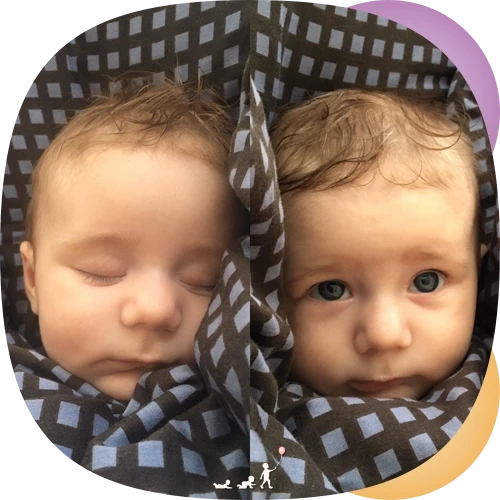
Many babies who prefer to turn their head to one side also have a so-called banana shape, also called a C-shape. This means that the body bends to one side in a curve like a banana. It shows in the head tilting down toward the shoulder on one side, and that side of the body being shorter than the other. The side where the body is shortest decides which side the baby’s banana shape is to. In the program, there is a section with exercises for banana shape for each side. The baby on the left in the picture has a banana shape to the left, because their body is bent to the left, and the baby on the right has a banana shape to the right, because their body is bent to the right.

Preferred Side and Flat Head FAQ Banana Shape

What is a flat head on one side?

A flat head on one side, called plagiocephaly in professional terms, means that the back of the head becomes flat on one side. It is a very common consequence of a preferred side, because the baby lies mostly on the preferred side of the back of the head. How quickly the skull becomes uneven varies from child to child. Some children have larger fontanelles (the soft spot) and therefore a more malleable skull, while others can have a marked preferred side without getting a flat head on one side.

When a child has a preferred side, it always makes sense to prevent the head from becoming flat on one side, because we know that the flattening comes from the increased pressure on the back of the head on the preferred side. The program therefore also contains exercises and advice that can reduce the risk of a flat head on one side and relieve the back of the head if it has already become flat.

Preferred Side and Flat Head FAQ Plagiocephaly Flat Head

What is torticollis?

Torticollis is a more pronounced form of preferred side, in which the muscle on the side of the neck (the sternocleidomastoid muscle) was injured during birth. It occurs most often in babies whose birth involved a lot of pulling (vacuum delivery, C-section and so on), but it can also occur in babies who were in the breech position in the womb, or who had too little space in the womb (big baby, small mom). Torticollis shows in the head preferring to turn to one side and tilting to the opposite side.

The preferred side program is very relevant for babies with torticollis, because torticollis always gives a preferred side together with a banana shape to the opposite side and very often, as a result of the preferred side, a flat head on one side. You should still choose the program version based on which side your child prefers to look to (see the section What is a preferred side?).

Note: If your baby has pronounced torticollis, I recommend that a skilled physical therapist follows your baby alongside the home exercises. Working on the preferred side usually takes considerably longer when there is torticollis, so professional support along the way can be quite crucial, both to follow progress and to keep motivation up.

Preferred Side and Flat Head FAQ Torticollis

Frequently asked questions about Preferred Side and Flat Head

Treating a preferred side means strengthening the muscles and your baby’s sensory awareness toward the difficult side. You do that with daily exercises over time, because unfortunately there is no quick fix. Muscle strength and sensory awareness increase through active training. If your child has reduced passive mobility, I recommend combining the exercises with treatment from a competent, specialized professional. Reduced passive mobility shows when you can’t guide your child’s head all the way over to the difficult side, and your child shows discomfort when you try.

All three programs are built on the same exercises for tummy time and rolling. Choose Tummy Time if you simply want to support your baby’s motor foundation in general, Back Arching and Flat Head if your baby arches their back in tummy time instead of supporting themselves on their arms, and Preferred Side and Flat Head if your baby mostly turns their head to one side. If your baby has both a preferred side and back dominance, choose Preferred Side and Flat Head, because the first focus is on restoring symmetry. When the shape of the head comes from the way your baby lies, a head that is flat in the middle at the back goes with back dominance, and a head that is flat on one side goes with a preferred side.

As a rule, no. There is a lot of overlap between the programs, because they all support natural motor development at this stage. The programs Back Arching and Flat Head and Preferred Side and Flat Head contain the same exercises as Tummy Time, plus important additions and variations. So as a rule, choose only one program in this category for the same child. If you have twins whose preferred sides are opposite, one to the left and one to the right, write to me at maria@develobaby.com, and you’ll get both versions of the program with one purchase.

Always look from your child’s perspective when you assess whether your child has a preferred side to the right or to the left. Notice which way your child prefers to look during the day, and how they prefer to lie when they sleep. If your child prefers to have their head turned to

  • their right side, your child has a preferred side to the right, and you should choose to the right when you buy your exercise program.
  • their left side, your child has a preferred side to the left, and you should choose to the left when you buy your exercise program.

If you find out after buying that you chose the wrong side, write to me at maria@develobaby.com, and I’ll switch the program version for you.

Many babies have a preferred side, and quite a lot of research into the causes is being done these years. The risk is especially higher after a complicated birth (for example a vacuum delivery, a C-section or a baby born sunny side up). More cases are also seen in babies who were in the breech position in the womb, and in babies who had very little space (big baby, small mom). Babies can also develop a preferred side if, over a longer period, they have had considerably more sensory input from one side.

The recommendation that babies sleep on their back has had a big effect on how common a preferred side is. Statistics show a marked rise in flat heads on one side from 1994, when parents began to be advised to put babies to sleep on their back. We should in no way go back to babies sleeping on their tummy, because while flat heads on one side became more common, sudden infant death syndrome (SIDS) became much rarer. So it is important that we keep putting our babies to sleep on their back. But we need to be aware that a flat head on one side and a preferred side are probably here to stay, and that they are something we should take seriously.

No, research doesn’t support that. On the contrary, studies show again and again that sleeping on the back doesn’t increase the risk of inhaling vomit or choking on it, even in babies with reflux. That’s why babies should be put to sleep on their back on a flat surface for every sleep.

Sources: Krous et al. (2007), Tablizo et al. (2007), Moon, Carlin & Hand (2022), American Academy of Pediatrics (AAP): “The supine sleep position on a flat, noninclined surface does not increase the risk of choking and aspiration in infants and is recommended for every sleep, even for infants with gastroesophageal reflux.”

Yes, a baby can certainly have back dominance and a preferred side at the same time.

That is because back dominance is often linked to the arching tendency itself, meaning that the baby bends their body backward. A baby with a preferred side needs compensating strategies to hold their head up in tummy time and to stabilize their body in general. The extensor muscles, the muscles along the back of the body, are the easiest for the baby to recruit to compensate, and that is how the arching pattern develops.

When a baby has both an arching tendency and a preferred side, the first focus should be on restoring symmetry with strengthening exercises for the difficult side. Alongside this, you should help the baby into flexion, bending the body forward, to counteract the back dominance. At the same time, it is important to help the baby use the right muscles in the functions that require stabilization, for example during tummy time or when the baby needs to keep their head steady. These include the deep cervical flexors (deep neck flexors), the serratus anterior, the oblique abdominal muscles and the core muscles across the midline in general.

Another situation in which a baby can have both a preferred side and back dominance is reflux. Especially with silent reflux, babies often push their head backward to get away from the discomfort. Over time they use the extensor muscles more and slip into a more extensor-dominated pattern. This can happen to babies with a preferred side as well as to babies without one.

If a child with a preferred side has a banana shape, the banana shape is most often to the opposite side, but it can also be to the same side. That is why it is important to first assess whether your child has a banana shape at all, and if so, to which side. You get help with that in the program, which has a section with pictures and videos for the banana shape on each side. At the start of each section, a video shows babies with exactly that banana shape, so you can compare them with your child. The program is set up so that you can stick to the exercises that suit your child: only the exercises for a preferred side or only the exercises for banana shape if your child has one of them, or all the exercises if your child has both.

In rare cases, a baby can have a banana shape without having a preferred side. In that case, the Preferred Side program is still the right one. It does not matter which version you buy (right or left), because the banana shape exercises for both sides are included in both versions.

A flat head on one side usually develops because the child has a preferred side and so, over a long period, has pressure on the same side of the skull. How quickly the skull becomes uneven varies from child to child. Some children have larger fontanelles (the soft spot) and therefore a more malleable skull, while others can have a pronounced preferred side without getting a flat head on one side. When a child has a preferred side, it therefore always makes sense to prevent the head from becoming flat on one side.

Yes, it can happen, but it is rare.

When the back of the head becomes flat on one side because of a preferred side, the flattening is called “positional”. This means that the baby prefers to lie with their head turned to one side, both when sleeping and when playing on their back. So pressure from the surface comes on the same side of the back of the head again and again, and over time that flattens it on that side. This is where exercises for a preferred side and good positioning advice help.

If, on the other hand, your baby has a flat head on one side without also preferring to lie on the flattened side of the head, it is relevant to be curious about whether something else might be going on. It could, for example, be a so-called “lambdoid craniosynostosis”, where the suture on one side of the skull has closed too early, so the skull cannot grow freely on that side. If you are unsure, talk to your healthcare provider or doctor. A flat head on one side is also seen now and then in babies who are always breastfed or bottle-fed lying on the same side, so the parent’s arm presses on the same spot on the back of the head again and again.

By far the most common and therefore most likely cause, though, is a preferred side, that is, a positional flat head on one side.

The skull can change shape as long as the fontanelles are open. In some babies they are almost closed by 7 to 8 months, while in others you can see a clear difference in the shape of the skull up to 18 months. It is very hard to find statistics on this in studies, which is also why so much differing advice is going around. But the fact is that it varies from child to child. I always say that it is worth working on as long as you get started before 9 to 10 months. The earlier you get started, the more time you have while the skull can still change shape. When the pressure is taken off the flat side, the body can slowly move back toward its starting point. But that doesn’t happen in a day or a week. It takes time.

Sadly, it is a persistent myth that the shape of the head always corrects itself. That is only true if the preferred side has gone away, that is, if the child no longer always turns their head to the same side when sleeping. If there is still a preferred side, the shape of the head does not correct itself. That is why it is important to work on the preferred side itself and on positioning, whether you do it with the exercises and positioning advice in the program or in some other way.

There is a section in the program with additional exercises and measures for when your child has developed a flat head on one side because of a preferred side. Among other things, you learn how best to relieve the pressure on the back of the head.

Frequently asked questions about the exercise programs

You buy access to the program right here on the site. Once your payment has gone through, you’ll see an extra heading in the menu called “My Programs,” with links to all the programs you’ve bought access to. The whole thing takes less than 60 seconds.

No. You get online access to my programs here on the site, because the programs contain video clips, which of course can’t be played on paper or in a PDF. That’s also why there is no version you can download or have sent to you. You can actually print the programs you’ve bought from a computer, though, by pressing Ctrl+P on Windows or Command+P on macOS while you’re on the program page. The programs aren’t set up for printing, however, so they look much nicer and are easier to use directly on your phone, tablet or computer.

You have lifetime access. Once you’ve bought a program, you can always log in and use it again whenever you need it, without having to renew or pay for access.

No, that isn’t allowed. You buy access for yourself and the people who live in your household. If you buy as a grandparent, for example, you may of course share it with the person you bought it for. If you are the director of a daycare center, for example, and would like to buy one or more programs for your staff, just email me at maria@develobaby.com so we can work out an arrangement for multiple licenses. Read more in my Terms and Conditions.

As a rule, no. The exercise programs are digital products that you get access to right away, so the usual 14-day right of withdrawal doesn’t apply to them. If you bought the wrong program by mistake, or something else doesn’t fit your situation, just write to me at maria@develobaby.com. Then of course we’ll find a solution together. You can read more in my Terms and Conditions.

Unfortunately, I see this from time to time: the card issuer, that is, your bank, blocks the payment because it goes to Denmark, especially if you don’t usually shop in other countries or only do so rarely. In that case, there’s not much I can do. You can call your bank and ask them to authorize the payment manually. Or you can try one of the other payment methods at checkout, for example Apple Pay or Google Pay.

Yes, I’ve taken great care to explain every exercise in plain language so everyone can understand it. The exercises also come with pictures and videos where you can see them done with a real child.

As a rule, no. The exercises in my motor programs are ordinary strengthening exercises in the anatomically normal muscle pattern, and the exercises in my sleep and sensory programs are calm exercises that stimulate the senses. If your child gets tired or upset, take a break, and if you are unsure about your child’s health, talk to your healthcare provider or doctor.

No! In my exercise programs, I’ve put the exercises in order of priority. There are lots of exercises in each program, so in principle you could spend the whole day doing exercises if you enjoy it, but you can also choose to do, say, the top three or five, which are the most important ones, if you’re short on time. That way, the exercise programs are for everyone, no matter how much time and energy you have.

The exercises in my motor development programs are basically strength training, just like when you do exercises yourself to get stronger. They are designed so the child strengthens the muscles that matter at exactly the stage you bought the exercises for. That’s why they help make the child stronger on the way to the next milestone. Whether the child gets good-quality movement patterns at the next milestone with the exercises in the program naturally depends on how strong the muscles are to begin with, and on whether there are special circumstances that call for a more individually tailored approach. These could be, for example, congenital disabilities or neurological injuries. But helping your child toward a stronger body is never wasted effort.

Related programs

Note: when purchasing two or more programs, a 10% discount is automatically applied. ❤

  • Back Arching and Flat Head

    Tummy time and rolling exercises for babies from 4 weeks, with a special focus and important additions for back arching, a flat head and the skydiver position. The program contains simple best-practice exercises that strengthen the muscles your baby needs to lie comfortably on their tummy and to roll.
  • Crawling on All Fours

    Exercises for crawling on all fours for babies who belly crawl, either with ordinary cross-pattern belly crawling or with midline belly crawling. The program contains easy best-practice exercises that strengthen both sides of the body equally and support your baby on the way from belly crawling to crawling. The exercises can be used both as cosy everyday play inspiration and in cases of motor delay.
  • Tummy Time

    Tummy time and rolling exercises for babies from 4 weeks, as cozy everyday play ideas and in cases of mild motor delay. The program contains simple best-practice exercises that strengthen the muscles your baby needs to lie comfortably on their tummy and to roll.
  • DeveloBaby Sleep

    Exercises for babies and very young children from 4 weeks up to 2 years with motor restlessness or other sensory-seeking behavior that makes it hard to settle, give in to sleep, or stay asleep. You get a wide range of practical, regulating sensory exercises that are easy to fit into a busy daily routine, plus best-practice knowledge about baby sleep.
  • Sensory Integration

    Sensory integration exercises for kids from 2 years to around 12 years who are sensory seeking and need a lot of sensory stimulation, or who are sensory avoiding and easily overwhelmed by loud noises, touch, or clothing. The program contains a wide range of practical sensory-stimulating exercises, plus sensorimotor games and activities that are easy to do at home.
  • Asymmetrical Belly Crawling

    Crawling exercises with a special focus and important additions for babies with asymmetrical belly crawling, meaning they belly crawl with only one leg and the opposite arm, while the other leg barely joins in. The program contains easy best-practice exercises that strengthen the weaker side and coordination, so the body can become more symmetrically strong on the way to crawling.
  • Tarzan Crawling and Bottom Scooting

    Walking exercises with a special focus and substantial additions for children who crawl with one foot planted on the floor (Tarzan crawling) or get around sitting on their bottom (bottom scooting), and who don’t walk without support yet. The program contains easy best-practice exercises that strengthen both sides of the body and the rotation muscles, so the body can become more symmetrically strong on the way to steady walking.
  • Walking

    Walking exercises for children who crawl on all fours, including children who already walk with support but don’t walk on their own yet. The program contains easy best-practice exercises that strengthen the body for strong, steady walking, and my best tips on how your child can find the courage to take those first steps without holding on. The exercises can be used both as cosy everyday play inspiration and in cases of motor delay.
  • Belly Crawling

    Exercises for belly crawling in babies who can roll from back to tummy but don’t yet move forward on their tummy. The program contains simple best-practice exercises that support your baby on the way to strong belly crawling using both sides of the body. The exercises strengthen the motor foundation for the next milestones and can be used both as cozy everyday play ideas and in cases of motor delay.

The latest from Instagram

Follow me on Instagram @develobaby, where I share evidence based motor development knowledge and fun! ❤️
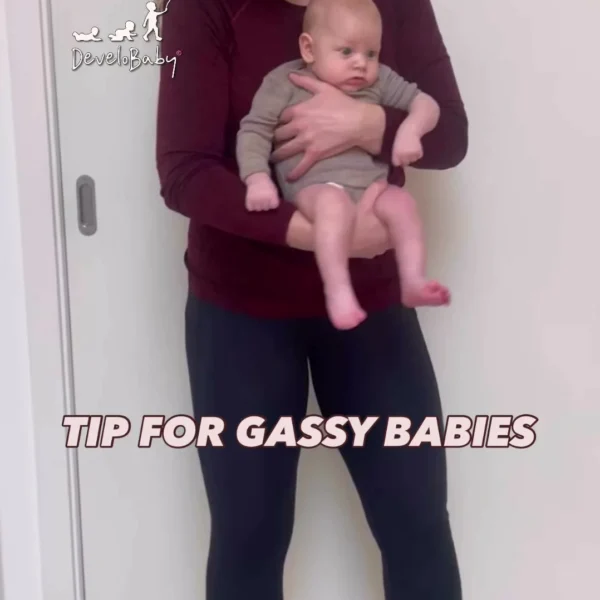
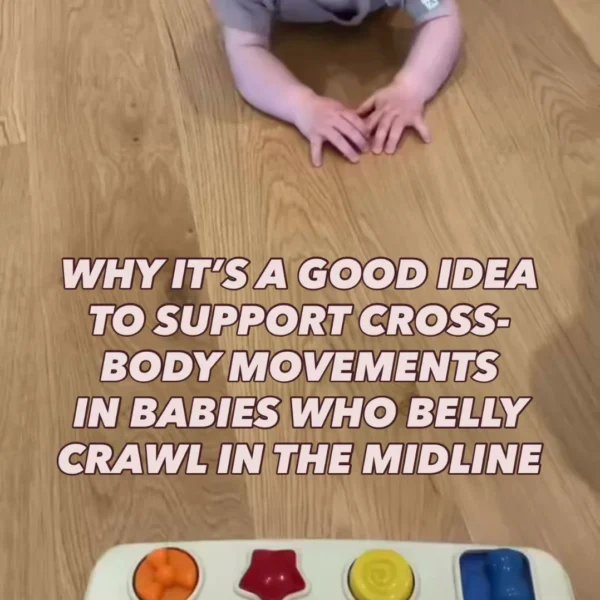
A good tip if your baby has gas, is to try moving the air around a bit, either by gently massaging the stomach or by mo…Midline belly crawling is a crawling style I often see in babies who have or have had back dominance. With back dominan…Belly crawling is an important milestone for most babies. During belly crawling, baby strengthens their core and learns…