Belly Crawling

Exercises for belly crawling in babies who can roll from back to tummy but don’t yet move forward on their tummy. The program contains simple best-practice exercises that support your baby on the way to strong belly crawling using both sides of the body. The exercises strengthen the motor foundation for the next milestones and can be used both as cozy everyday play ideas and in cases of motor delay.

  • Prioritized, simple exercises
  • Designed for busy families
  • Illustrated with pictures & videos
  • Instant & perpetual access
  • Secure payment with QuickPay

Available languages

299,00 DKK 269,10 DKK

(inclusive of all taxes, VAT and fees)

Program description

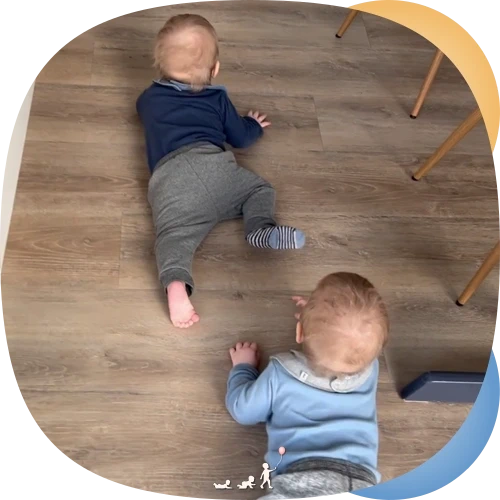
Belly crawling, also called army crawling or stomach crawling, is when your baby moves forward on their tummy. It is often your child’s first real experience of being able to get from A to B on their own, and therefore an important milestone in early motor development. This program contains best-practice home exercises to help your baby move on to strong belly crawling, where both sides of the body are used alternately.

The program can be used both for general play ideas and when your baby needs a little extra motor support. The exercises combine overall strengthening of the relevant muscles with targeted stimulation of coordination skills.

Finally, the program contains all the relevant exercises to strengthen weight bearing on the arms, that is, your baby’s ability to support themselves on their arms. They are relevant if your baby often lies in the skydiver position with their arms lifted off the floor and therefore cannot pull themselves forward.

If your baby has a preferred side, I recommend doing each exercise in the program mainly toward the side that is harder for your baby. That way, you can use the exercises in a targeted way to support belly crawling that uses both sides of the body.

Note: If your child is not rolling yet, please choose this program instead: Tummy Time and Rolling.
Note: If your child is already belly crawling, please choose this program instead: Crawling on All Fours.

Frequently asked questions about Belly Crawling

Belly crawling is the first milestone in which babies move forward across the floor. When belly crawling, babies move forward on their tummy: the tummy stays on the floor, and they pull and push themselves forward with their arms and legs. Crawling on all fours is done with the hands and knees on the floor and takes a lot more muscle strength. That is why belly crawling usually comes before crawling on all fours.

The program is for children who can lie on their tummy and play, can roll from back to tummy, and are well on their way to turning around in a circle on their tummy, a bit like the hands of a clock (pivoting). If your child can’t do these things yet, I recommend starting with an exercise program from the tummy time and rolling category, which contains general strengthening exercises for the stage before belly crawling.

With targeted exercises that strengthen the muscles your baby uses for belly crawling and, at the same time, stimulate coordination. Not least, this includes the ability to support themselves on their arms, so they can pull themselves forward. In the program, I have put the exercises in order of priority, with the most important ones at the top, and you can fit them into all the little things you do with your baby during the day anyway.

The skydiver position is when your baby lies on their tummy and lifts their arms, and often their legs too, off the floor instead of resting their weight on them. Without arms and legs on the floor, it is hard for your baby to pull and push themselves forward. That is why the program has a section with additional exercises and other things you can do if your baby does the skydiver during tummy time.

Frequently asked questions about the exercise programs

You buy access to the program right here on the site. Once your payment has gone through, you’ll see an extra heading in the menu called “My Programs,” with links to all the programs you’ve bought access to. The whole thing takes less than 60 seconds.

No. You get online access to my programs here on the site, because the programs contain video clips, which of course can’t be played on paper or in a PDF. That’s also why there is no version you can download or have sent to you. You can actually print the programs you’ve bought from a computer, though, by pressing Ctrl+P on Windows or Command+P on macOS while you’re on the program page. The programs aren’t set up for printing, however, so they look much nicer and are easier to use directly on your phone, tablet or computer.

You have lifetime access. Once you’ve bought a program, you can always log in and use it again whenever you need it, without having to renew or pay for access.

No, that isn’t allowed. You buy access for yourself and the people who live in your household. If you buy as a grandparent, for example, you may of course share it with the person you bought it for. If you are the director of a daycare center, for example, and would like to buy one or more programs for your staff, just email me at maria@develobaby.com so we can work out an arrangement for multiple licenses. Read more in my Terms and Conditions.

As a rule, no. The exercise programs are digital products that you get access to right away, so the usual 14-day right of withdrawal doesn’t apply to them. If you bought the wrong program by mistake, or something else doesn’t fit your situation, just write to me at maria@develobaby.com. Then of course we’ll find a solution together. You can read more in my Terms and Conditions.

Unfortunately, I see this from time to time: the card issuer, that is, your bank, blocks the payment because it goes to Denmark, especially if you don’t usually shop in other countries or only do so rarely. In that case, there’s not much I can do. You can call your bank and ask them to authorize the payment manually. Or you can try one of the other payment methods at checkout, for example Apple Pay or Google Pay.

Yes, I’ve taken great care to explain every exercise in plain language so everyone can understand it. The exercises also come with pictures and videos where you can see them done with a real child.

As a rule, no. The exercises in my motor programs are ordinary strengthening exercises in the anatomically normal muscle pattern, and the exercises in my sleep and sensory programs are calm exercises that stimulate the senses. If your child gets tired or upset, take a break, and if you are unsure about your child’s health, talk to your healthcare provider or doctor.

No! In my exercise programs, I’ve put the exercises in order of priority. There are lots of exercises in each program, so in principle you could spend the whole day doing exercises if you enjoy it, but you can also choose to do, say, the top three or five, which are the most important ones, if you’re short on time. That way, the exercise programs are for everyone, no matter how much time and energy you have.

The exercises in my motor development programs are basically strength training, just like when you do exercises yourself to get stronger. They are designed so the child strengthens the muscles that matter at exactly the stage you bought the exercises for. That’s why they help make the child stronger on the way to the next milestone. Whether the child gets good-quality movement patterns at the next milestone with the exercises in the program naturally depends on how strong the muscles are to begin with, and on whether there are special circumstances that call for a more individually tailored approach. These could be, for example, congenital disabilities or neurological injuries. But helping your child toward a stronger body is never wasted effort.

Related programs

Note: when purchasing two or more programs, a 10% discount is automatically applied. ❤

  • DeveloBaby Sleep

    Exercises for babies and very young children from 4 weeks up to 2 years with motor restlessness or other sensory-seeking behavior that makes it hard to settle, give in to sleep, or stay asleep. You get a wide range of practical, regulating sensory exercises that are easy to fit into a busy daily routine, plus best-practice knowledge about baby sleep.
  • Back Arching and Flat Head

    Tummy time and rolling exercises for babies from 4 weeks, with a special focus and important additions for back arching, a flat head and the skydiver position. The program contains simple best-practice exercises that strengthen the muscles your baby needs to lie comfortably on their tummy and to roll.
  • Tarzan Crawling and Bottom Scooting

    Walking exercises with a special focus and substantial additions for children who crawl with one foot planted on the floor (Tarzan crawling) or get around sitting on their bottom (bottom scooting), and who don’t walk without support yet. The program contains easy best-practice exercises that strengthen both sides of the body and the rotation muscles, so the body can become more symmetrically strong on the way to steady walking.
  • Asymmetrical Belly Crawling

    Crawling exercises with a special focus and important additions for babies with asymmetrical belly crawling, meaning they belly crawl with only one leg and the opposite arm, while the other leg barely joins in. The program contains easy best-practice exercises that strengthen the weaker side and coordination, so the body can become more symmetrically strong on the way to crawling.
  • Walking

    Walking exercises for children who crawl on all fours, including children who already walk with support but don’t walk on their own yet. The program contains easy best-practice exercises that strengthen the body for strong, steady walking, and my best tips on how your child can find the courage to take those first steps without holding on. The exercises can be used both as cosy everyday play inspiration and in cases of motor delay.
  • Preferred Side and Flat Head

    Tummy time and rolling exercises for babies from 4 weeks, with a special focus and important additions for a preferred side, a flat head on one side and a banana shape. The program contains simple best-practice exercises that strengthen the muscles your baby needs to lie comfortably on their tummy and to roll.
  • Crawling on All Fours

    Exercises for crawling on all fours for babies who belly crawl, either with ordinary cross-pattern belly crawling or with midline belly crawling. The program contains easy best-practice exercises that strengthen both sides of the body equally and support your baby on the way from belly crawling to crawling. The exercises can be used both as cosy everyday play inspiration and in cases of motor delay.
  • Tummy Time

    Tummy time and rolling exercises for babies from 4 weeks, as cozy everyday play ideas and in cases of mild motor delay. The program contains simple best-practice exercises that strengthen the muscles your baby needs to lie comfortably on their tummy and to roll.
  • Sensory Integration

    Sensory integration exercises for kids from 2 years to around 12 years who are sensory seeking and need a lot of sensory stimulation, or who are sensory avoiding and easily overwhelmed by loud noises, touch, or clothing. The program contains a wide range of practical sensory-stimulating exercises, plus sensorimotor games and activities that are easy to do at home.

The latest from Instagram

Follow me on Instagram @develobaby, where I share evidence based motor development knowledge and fun! ❤️
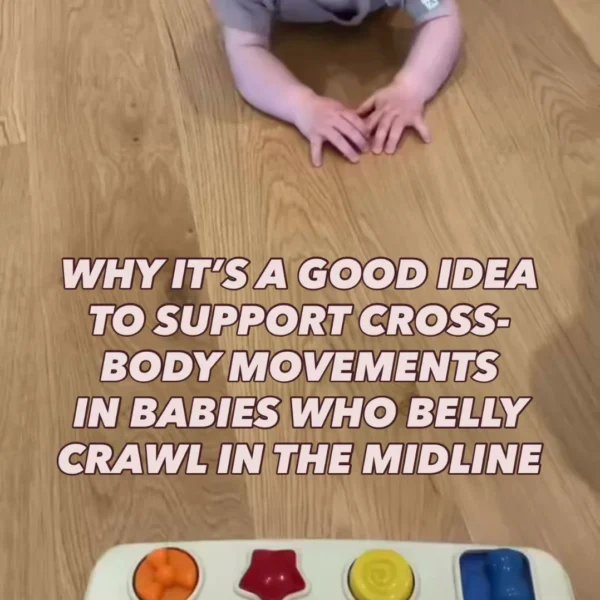
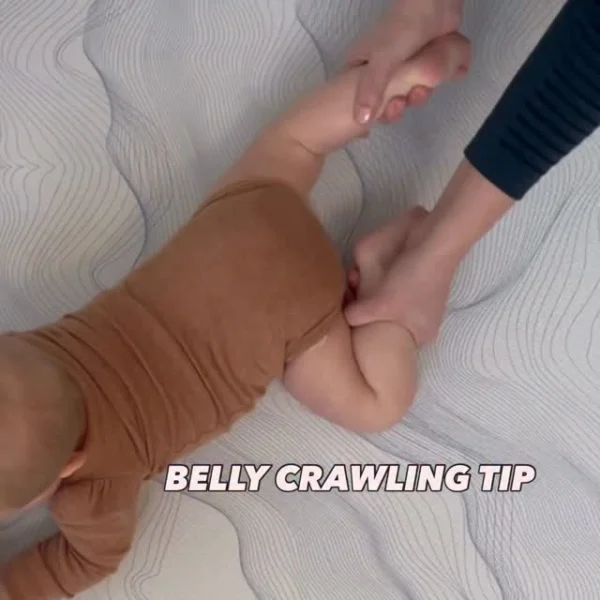
Midline belly crawling is a crawling style I often see in babies who have or have had back dominance. With back dominan…Belly crawling is an important milestone for most babies. During belly crawling, baby strengthens their core and learns…My daughter slept so poorly for a long time when she was a baby…! Back then, I was working as a clinic physio for adult…